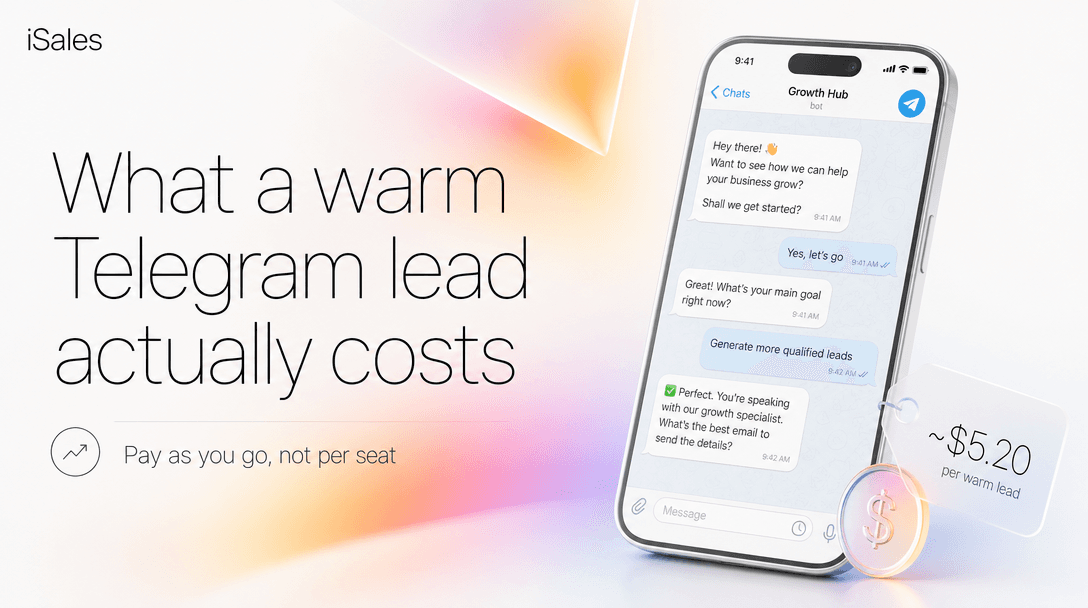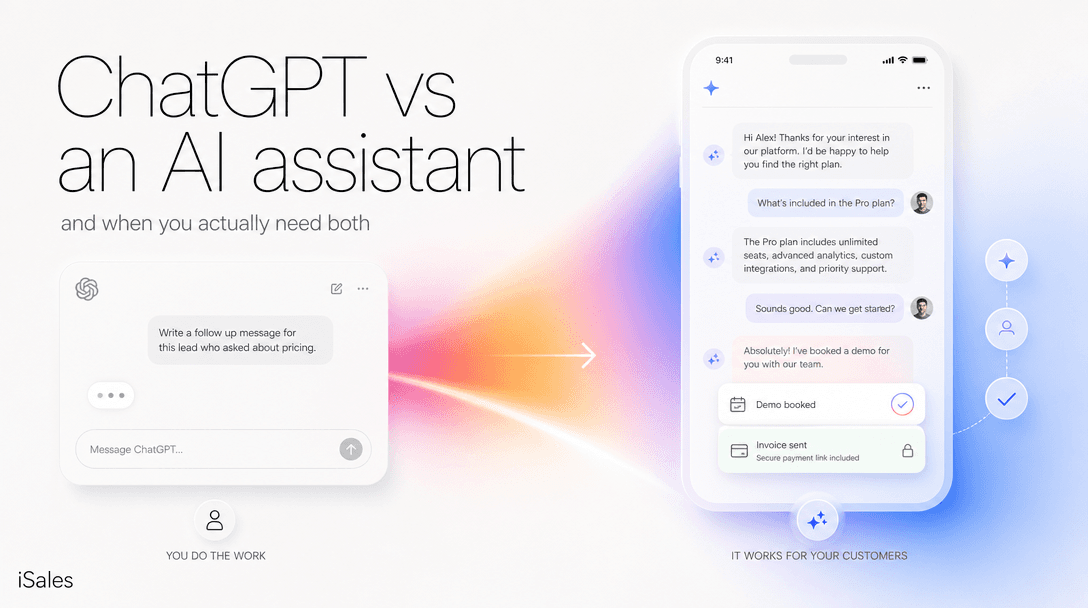
TL;DR: The answer comes down to one number you can measure today: how many customer messages you already route through ChatGPT by hand. ChatGPT is a co-pilot you prompt; it can't sit in your inbox and answer a stranger at 11pm. Every time it drafts a reply that you then paste back to a customer, you're paying a hidden labor cost. Below is a fill-in calculator that prices that "copy-paste tax" in about 30 seconds. If it comes out under an hour a month, close this tab and keep pasting by hand. If it comes out as a full workday a month, that's when a customer-facing assistant starts to pay for itself.
- Who this is for: solo founders, creators, and small teams who already pay for ChatGPT and are wondering whether a second tool is worth it.
- What you'll get: a reusable calculator to price your own situation, the real build cost of the DIY route, the row where the assistant loses, and a clear "don't bother yet" threshold.
- Last updated: 2026-07-05.
What you're really deciding
Search "ChatGPT vs AI agent" and you'll get a hundred pages arguing which is smarter, usually citing the same one-line test from Make.com ("can it finish the job without coming back to you?"). Fine test. Not your question.
ChatGPT and a customer-facing assistant run on the same class of model. What separates them is a practical thing: how long copy-pasting answers out of ChatGPT stays cheaper than handing that job to software. Right now every customer answer it gives you costs a step you perform yourself: read the message, switch tabs, prompt ChatGPT, read the draft, switch back, paste, send. That round-trip is the thing you're pricing.
The copy-paste tax: fill in your own number
Here's a calculator you run on your own numbers. Copy the table, fill the middle column, and read the bottom row. The worked example is a small flower shop; the numbers on the right are illustrative, so plug in your own.
| Step | Your number | Worked example (flower shop) |
|---|---|---|
| ① Messages you paste through ChatGPT per day | ___ | 15 |
| ② Minutes per copy-paste round-trip | ___ | 2 |
| ③ Hours a month = ① × ② × 30 ÷ 60 | ___ | ≈ 15 h |
| ④ What your own hour is worth | ___ | $20 |
| A. Your time, per month = ③ × ④ | ___ | ≈ $300 |
| ⑤ After-hours "who answers first" leads per week | ___ | 6 |
| ⑥ Share that would actually book — stay conservative, say 1 in 3 | ___ | 33% |
| ⑦ Your average order value | ___ | $40 |
| B. Revenue leaking overnight = ⑤ × ⑥ × ⑦ × 4.3 | ___ | ≈ $340 |
| Copy-paste tax = A + B (your numbers, not ours) | ___ | ≈ $640 / mo |
Line A is your time being ChatGPT's hands. Line B is the revenue that leaks while you sleep: the after-hours "can you deliver tomorrow morning?" messages from people who ask two competitors and buy from whoever answers first. Notice row ⑥ — the one variable you can't really know. The example sets it low on purpose: even if only 1 in 3 of those leads would have booked, Line B still clears $300. Set it higher only if you have a reason to.
Now weigh that against the other side of the ledger. In the example the assistant answers those ~15 messages a day — about 450 a month — and a normal text reply runs a few US cents, billed per action rather than as a flat subscription. That's roughly $15 a month in usage, plus about 10 minutes a day checking its replies the first week. A tax near $640 against a run cost near $15 is the whole argument. ChatGPT Plus, meanwhile, is a flat $20/mo and stays there; the subscription barely moves the total. The tax is made of Line A — your time.
A Tuesday, 11:40pm (an illustration)
Same message, both tools. A scenario, not a case study.
A customer messages "hi, can you deliver a bouquet by tomorrow morning?" at 11:40pm.
- On ChatGPT: nothing happens. ChatGPT doesn't know the message exists; it only answers you, when you prompt it. The lead sits until 9am. By then she's asked two other shops.
- On a customer-facing assistant: it wakes on the incoming message, checks your delivery zones and cutoff from the docs you gave it, replies in your voice ("yes, morning delivery works if you order by 8am, that bouquet is $28"), files her as a lead with the full thread, and can drop an invoice if she says yes. You read it over coffee.
The difference is entirely about who does the routing, remembering, and follow-up: you, or the software. And it happens inside the app your customer already opened, not in a separate window you have to be watching.
What ChatGPT is genuinely better at
For plenty of jobs ChatGPT is the better tool. Here's where it wins outright:
| What you need | ChatGPT Plus | A Telegram-native AI assistant |
|---|---|---|
| Drafting, rewriting, reasoning, world knowledge | ✅ Its core strength | ➖ Capable, but not the point |
| Useful the second you log in, zero setup | ✅ Instant | ❌ Needs a short connect + your docs |
| Nailing a weird, one-off question right now | ✅ You steer it live | ⚠️ May get an edge case wrong unsupervised |
| Answering your customers in your Telegram/WhatsApp | ❌ No customer channel | ✅ In your brand voice |
| Remembering each lead and their history | ❌ Account-level only | ✅ Per-lead thread + status |
| Running 24/7 on incoming messages, unprompted | ❌ You prompt it | ✅ Answers overnight on its own |
| Invoicing an inbound customer in the chat | ❌ Not for your channel | ✅ On your own payment systems |
| Cost shape | Flat $20/mo | Per-action, first 30 free |
Take the top three rows seriously. If your AI work is your work — first drafts, research, thinking out loud, the occasional gnarly one-off you want to babysit — then ChatGPT wins and an assistant is a worse fit. It only pulls ahead on the rows about other people's messages.
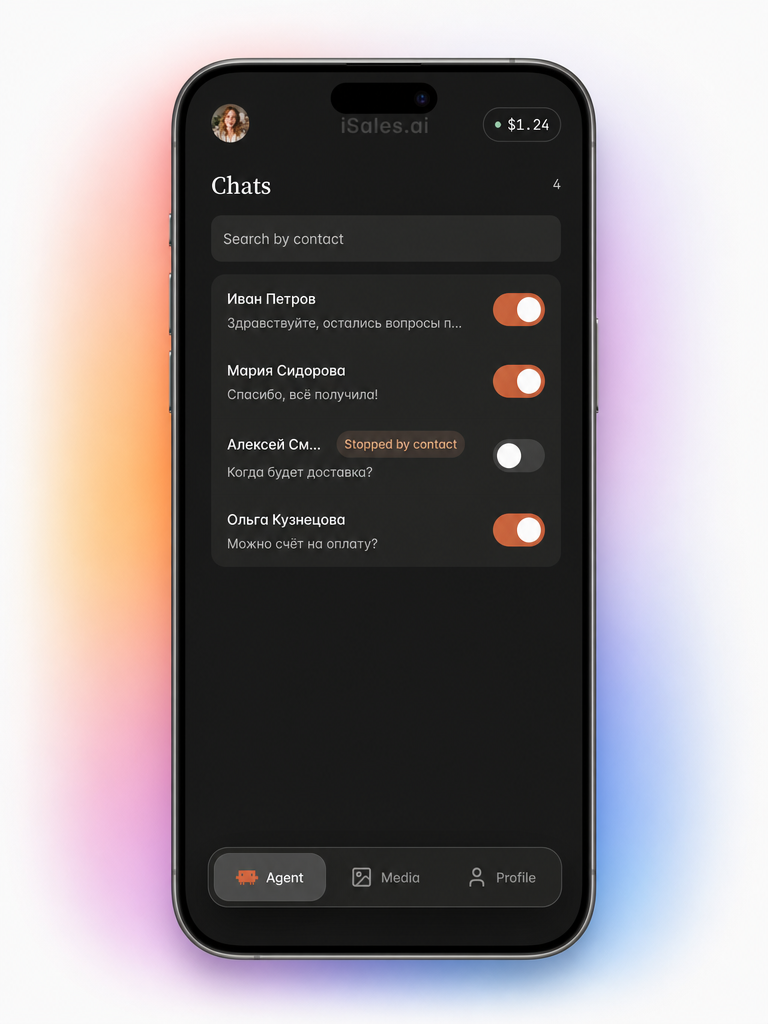
Look closely at "remembering each lead," because it's the one people underestimate. ChatGPT's memory is account-level: it can carry notes about you across chats, but it can't hold a separate history and status for each customer. That bookkeeping is either yours to do or the software's.
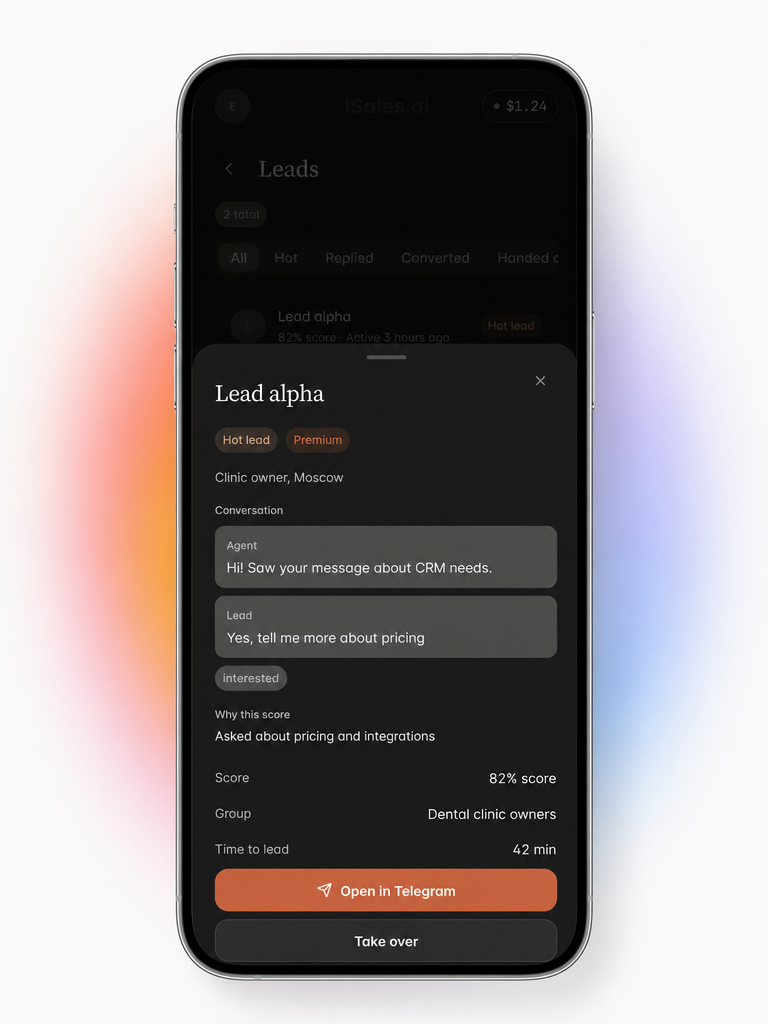
And the row the assistant loses matters: running unsupervised, it will confidently get an unusual question wrong. Budget about 10 minutes a day skimming its replies that first week, and on anything money-critical keep a human check. ChatGPT-with-you-watching is more accurate on a strange one-off precisely because you're in the loop. That's the trade: autonomy costs you a little oversight back.
"I'll just wire ChatGPT up myself"
You can. ChatGPT has an API; the parts are all buyable. But "wire it up" hides a real build, so price that too.
To make ChatGPT answer your customers you'd assemble: an API wrapper, a hosted bot that receives messages, a channel integration (Telegram/WhatsApp), a small database for per-lead state, a retrieval layer over your own documents so it answers on your prices and policies instead of the internet's average, a payment integration, and the unglamorous parts (retries, moderation, uptime monitoring) because it now runs unattended in front of customers.
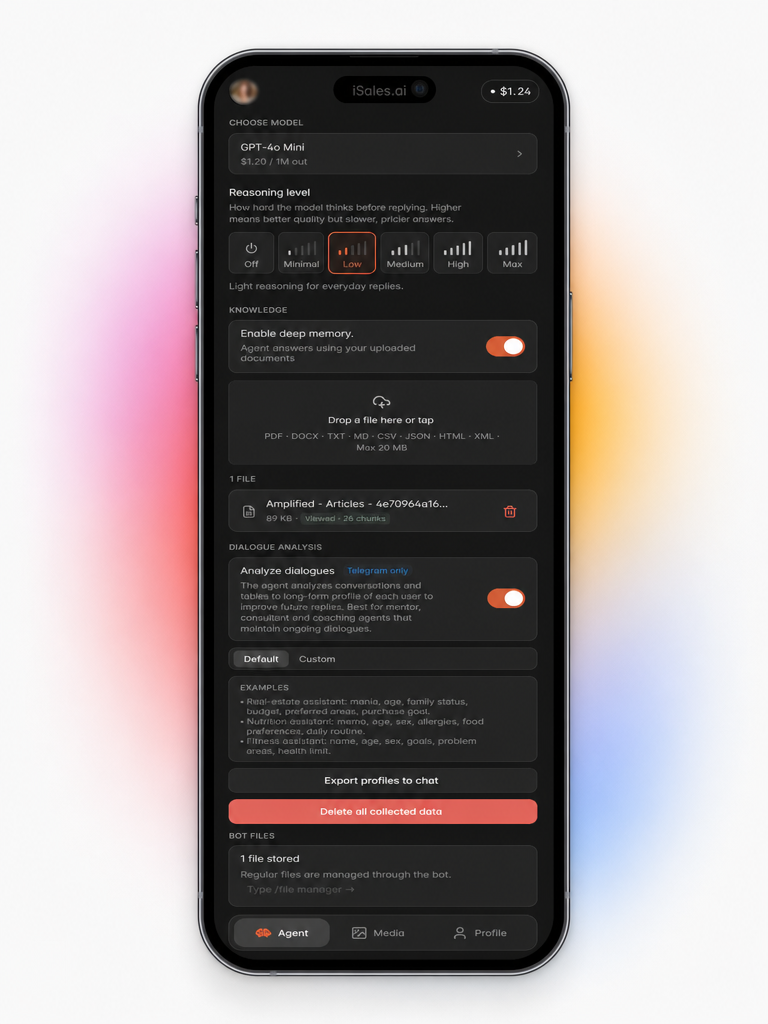
A competent developer gets a rough first version in ~20–40 hours. Then it's yours forever: ~$10–30/month in hosting and API on top of usage, plus ~2–4 hours a month of upkeep every time a channel API shifts or it falls over at 2am. Priced at typical freelance backend rates (~$25–40/hr), the build is ~$500–1,500 to stand up, then a small monthly bill and a standing maintenance chore.
That's not an argument against building it. If you enjoy the project and have the weekend, it's a genuinely good weekend. It's an argument for pricing "just wire it up" at what it really is: a product you'd be maintaining, versus a product that already ships the loop assembled — the reply, the per-lead memory, the grounding on your docs, and the invoice, in one thread.
When to stay on ChatGPT
Run the calculator and trust the answer. If your entire after-hours inbox is under about 5 customer messages a week, and you're usually near your phone during the day, your copy-paste tax is under an hour a month. When you're at your phone by day, row ① is close to zero, so only that after-hours handful is left — and it's less than the assistant costs to run and supervise. Stay on ChatGPT, paste by hand, and revisit when your inbox grows.
The line flips when any of these becomes true: inbound customer messages need a reply when you're away; you're losing track of who asked what; or you want to send that customer an invoice inside the chat. Below the line, ChatGPT alone is the right call. Above it, the copy-paste tax already costs more than the fix.
FAQ
Does it read my entire inbox, and where do my documents live? It acts on the customer conversations you connect, and it grounds replies on the knowledge base you upload (your docs, prices, policies). Treat that base like any business tool: put in what customers need answered, keep out anything you wouldn't want a vendor storing.
If I stop paying, do I lose my leads? Your captured leads and threads are yours to read and export. The assistant is the thing that stops answering; the history it built stays with you, which matters if you ever hand the conversations back to a human.
Won't usage-based pricing surprise me with a big bill? Text replies cost a couple of cents each, and heavy actions (like generating an image) show their price before they run. You top up a balance and spend it on actions you trigger. There's no per-resolved-conversation surcharge on top.
Do I still need ChatGPT if I get this? Almost certainly yes. Different jobs. Keep ChatGPT for your own drafting and thinking; the assistant handles the customer-facing work. Cancelling ChatGPT isn't the trade on offer.
Next step
Want to see it answer in your niche before spending anything? Start the AI Growth Starter: four questions and a live demo dialog, no card. Open @personal_business_bot and try it on a real question your customers actually ask.
Sources & last updated
- OpenAI — ChatGPT agent mode, memory, and Instant Checkout (official product pages). openai.com/index/introducing-chatgpt-agent
- Make.com — "AI agents vs ChatGPT" (the "finish without you" test, referenced above). make.com/en/blog/ai-agents-vs-chatgpt
- ChatGPT Plus pricing ($20/mo).
- Our own economics — prepaid, per-action balance and the free starter tier are on the pricing page (text reply ≈ a couple of cents): /pricing.
Competitor prices checked July 2026 — list prices, subject to change.